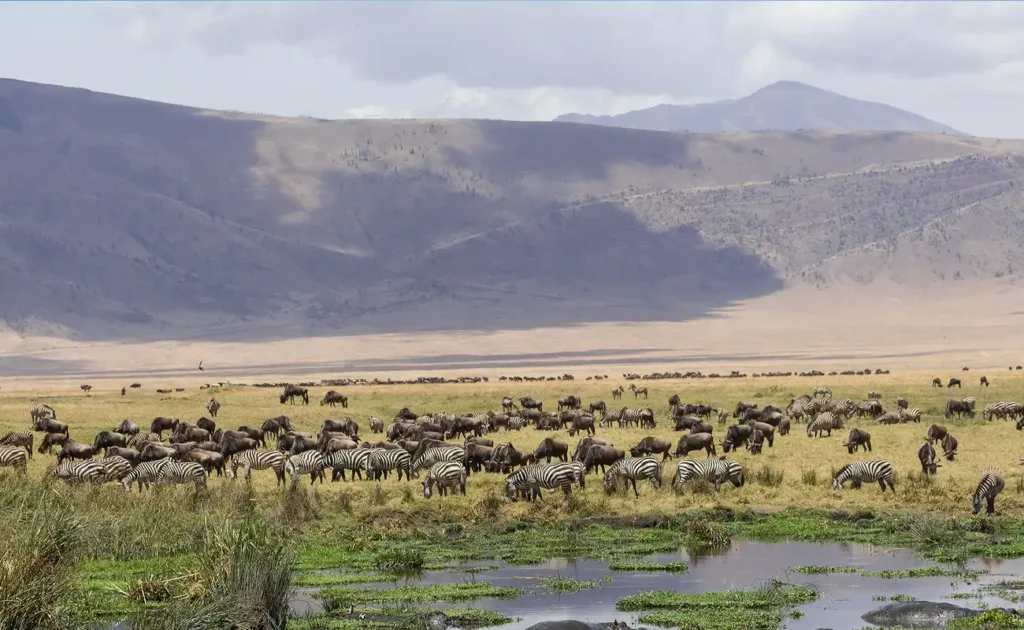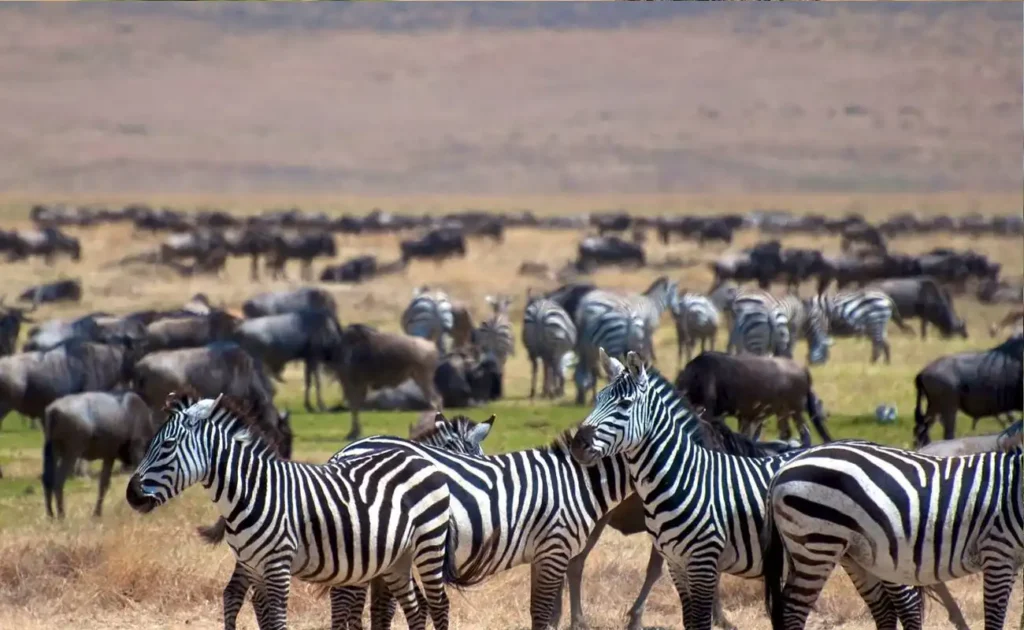
Picture this: over a million wildebeests on a grand migration, their journey spanning 1,200 miles across the Serengeti’s vast plains. This spectacle sets the stage for the Serengeti’s claim to fame: its endless horizons and large, migrating herds. It contrasts starkly with Ngorongoro Crater, which offers a more enclosed view of wildlife within its steep walls, something akin to nature’s amphitheater.
The Serengeti is a UNESCO World Heritage site, renowned for its complete and rich ecosystem, a staggering 30,000 square kilometers of savanna paradise. In contrast, Ngorongoro Crater, once a gigantic volcano, now describes a different narrative; a 260 square kilometer caldera brimming with biodiversity. Interestingly, while Serengeti covers more territory, the density of wildlife in Ngorongoro makes it feel equally, if not more, vibrant on any given day.

Geographical Contrasts Between Serengeti and Ngorongoro Crater
The Serengeti is a vast expanse, covering nearly 30,000 square kilometers in Tanzania. It stretches into Kenya, featuring flat grasslands as far as the eye can see. The area is famous for the Great Migration, where wildebeests and zebras journey across these plains. In contrast, the Ngorongoro Crater is a much smaller area, around 260 square kilometers, nestled within the larger Ngorongoro Conservation Area. This crater, formed millions of years ago by a volcanic eruption, offers a unique, bowl-shaped environment.
Surrounded by steep, lush walls, the crater forms its own ecosystem. It’s like a natural zoo, concentrating a wide variety of animals. The Serengeti, on the other hand, is more open, allowing for massive herds to roam. Its endless plains and flowing savannas characterize a different landscape type. This means visitors to Serengeti often experience a sense of open wilderness.
The climate in the Serengeti is predominantly tropical, with rain from March to May and a shorter rainy season in November. This weather pattern supports the lush grasslands. Ngorongoro Crater, though part of the same conservation area, has slightly different weather. Due to its elevation, the crater experiences cooler temperatures and more rainfall year-round. The temperature differences create distinct environments for various flora and fauna.
Both locations present unique attractions. Serengeti’s allure lies in its vastness and migratory spectacles, while Ngorongoro offers a compact, but vibrant, setting. Visiting Tanzania gives a chance to experience both worlds. The geographical diversity within such a small area is truly remarkable. This contrast makes each destination a must-see for nature lovers.
Overview of Size, Terrain, and Climate Distinctions
The Serengeti covers an impressive area, making it one of Africa’s largest wildlife regions. Spanning around 30,000 square kilometers, its vast plains seem endless, teeming with life. This size supports activities like the famous Great Migration. In stark contrast, Ngorongoro Crater is more compact, roughly 260 square kilometers in size. Despite being smaller, its enclosed setting offers a concentrated environment for observing wildlife.
Serengeti’s terrain is predominantly flat, characterized by open grasslands and occasional woodlands. The openness allows for large herds to wander freely across the landscape. This setup makes it perfect for viewing migratory patterns and animal behaviors. Ngorongoro’s terrain, however, is steep and enclosed. Its walls create a unique, self-contained world where animals and plants thrive.
The climate further differentiates these two landmarks. Serengeti enjoys a tropical climate with distinct rainy and dry seasons. These patterns are vital to its ecosystem, influencing migration and plant growth. Ngorongoro Crater experiences cooler temperatures owing to its elevation. Combined with more frequent rainfall, the climate creates lush vegetation within the crater.
The geographical contrasts between Serengeti and Ngorongoro enhance their appeal. Each offers diverse experiences rooted in their unique size, terrain, and climate. Visitors gain insights into the interplay of natural forces shaping African wildlife. Tanzanian safaris often include both destinations, offering a panoramic view of nature’s wonders. From blazing savannas to vibrant crater floors, the contrasts captivate any traveler.
Ecology and Wildlife Diversity in Serengeti vs. Ngorongoro Crater
The Serengeti is renowned for its vast herds and the spectacular Great Migration. Millions of wildebeests and zebras move through the park in search of fresh grazing lands. These migrations are crucial, not just for the animals, but for the park’s ecological balance. Alongside the herds, predators like lions and cheetahs thrive, waiting for their chance to hunt. Birds, reptiles, and amphibians also find a haven in Serengeti’s diverse ecosystem.
Ngorongoro Crater’s ecosystem is different due to its enclosed nature. It is home to several large animal species, including elephants, lions, and rhinos, all within this natural amphitheater. The crater’s rich grasslands and permanent water sources support an impressive variety of wildlife year-round. Unlike the expansive Serengeti, Ngorongoro presents a more concentrated, yet equally diverse, animal population. This makes it easier for visitors to spot wildlife within a smaller area.
One key feature that distinguishes both locations is their vegetation. Serengeti’s wide plains are marked by acacia trees and seasonal rivers that cater to migratory animals. Ngorongoro has luxuriant greenery, filled with dense forests on crater walls and wetlands. These differences in vegetation create distinct habitats. Each supports unique flora and fauna, contributing to the incredible biodiversity found in Tanzania.
Both Serengeti and Ngorongoro offer priceless glimpses into nature’s wonders. Each showcases a dynamic mix of life forms, from the tiniest insects to the grandest mammals. Tourists are often amazed by the sheer diversity and beauty around them. Exploring these areas reveals how complex and interconnected these ecosystems are. They set the stage for unforgettable wildlife experiences in Africa.
Conservation Efforts and Tourist Impact on Both Sites
The Serengeti and Ngorongoro Crater are both important for wildlife conservation. The Tanzanian government, along with various international organizations, has put extensive efforts into protecting these areas. In Serengeti, anti-poaching programs have been introduced to safeguard species like elephants and rhinos. These programs involve strict patrols and surveillance. Efforts also focus on preserving the Great Migration, which is vital for the ecosystem.
Ngorongoro Crater has its own set of conservation strategies. One major initiative is habitat restoration, which helps maintain the balance of the crater’s diverse ecosystem. Conservationists also work on monitoring animal populations, ensuring that species like black rhinos and lions continue to thrive. Community involvement is key, with local tribes participating in preservation activities. This integration helps protect the environment while respecting indigenous cultures.
Tourism has both positive and negative impacts on these sites. On the one hand, visitors bring essential revenue that funds conservation projects. Attractions like safari tours and wildlife photography are popular, drawing tourists from around the globe. However, the influx of visitors can strain natural resources. Managing the number of tourists is crucial to prevent habitat degradation.
In the Serengeti, designated tourist paths work to minimize human impact. These paths limit vehicle damage to vegetation and reduce disturbances to animals. Likewise, Ngorongoro Crater has restrictions on lodge constructions and vehicle entries. Controlled access helps keep the environment pristine. In both areas, eco-friendly practices are encouraged to reduce waste and carbon footprint.
NGOs and government bodies continue to develop new strategies to balance tourism and conservation. Education is a significant part of their efforts, raising awareness among visitors about responsible tourism. Tourists are encouraged to follow guidelines that support preservation. This collaborative approach ensures that these natural wonders can be enjoyed by future generations. Ultimately, both Serengeti and Ngorongoro Crater exemplify successful models of conservation and sustainable tourism.
Key Takeaways
- The Serengeti is vast, famous for the Great Migration of animals.
- Ngorongoro Crater offers a lush, enclosed environment with diverse wildlife.
- Both areas have unique terrains that support various animal species.
- Conservation efforts focus on habitat restoration and anti-poaching measures.
- Sustainable tourism helps fund conservation while preserving these natural wonders.
Conclusion
The Serengeti and Ngorongoro Crater are two of Africa’s most iconic natural landmarks. Each offers unique experiences, from the vast plains of the Serengeti to the enclosed ecosystem of Ngorongoro. Their differences highlight the incredible biodiversity found within Tanzania.
Effective conservation efforts and responsible tourism practices ensure these natural wonders remain protected. By visiting these sites, you can contribute to their preservation while witnessing nature at its finest. It is crucial to balance enjoyment and sustainability for future generations.